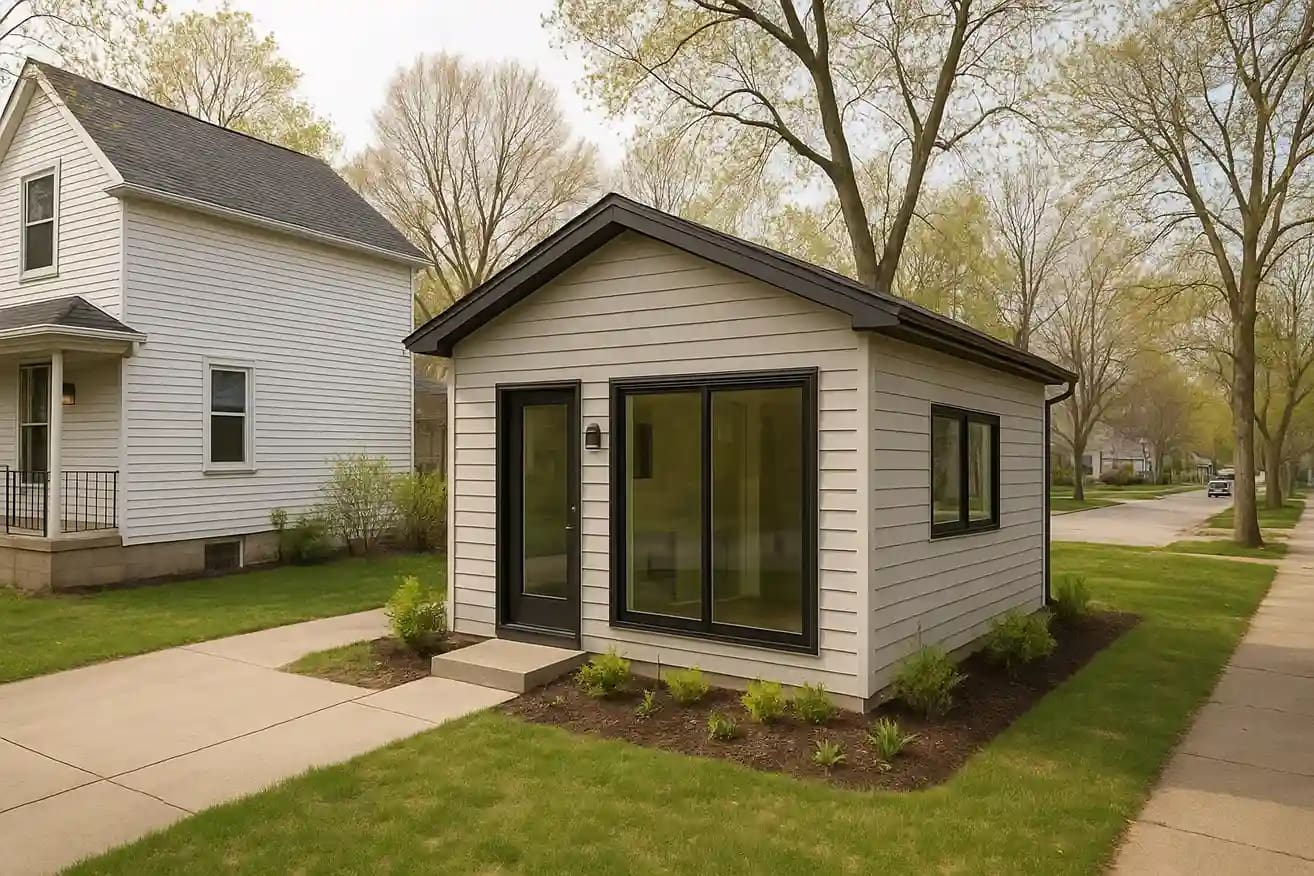
Accessory Dwelling Units (ADUs), sometimes called in-law suites or backyard apartments, are reshaping Buffalo’s housing landscape.
They provide affordable, flexible living options for multigenerational families, caregivers, or homeowners seeking extra income through rentals.
Before reviewing which suburbs still restrict ADUs, visit the Buffalo Living and Property Trends 2026 hub for the latest local zoning updates, tiny home regulations, and sustainable housing resources across Western New York.
Buffalo ADU Laws: Current Rules for 2026
Buffalo, New York, continues to support secondary dwellings through the Plus One ADU Program, launched in 2024.
As of 2026:
- ADUs are conditionally permitted in most residential zones (R1–R3) under the city’s Unified Development Ordinance (UDO) and the Plus One ADU Program.
- Homeowners must apply for a zoning certificate and building inspections.
- Detached ADUs require a minimum lot size of 4,000 sq. ft. and at least 5 ft setbacks.
- One of the units must remain owner-occupied.
(Source: City of Buffalo Unified Development Ordinance (UDO), Section 6.1.2 – Residential Districts; and One ADU Program – Office of Strategic Planning, City of Buffalo.)
Suburbs Allowing ADUs (Permitted or Conditional Use)
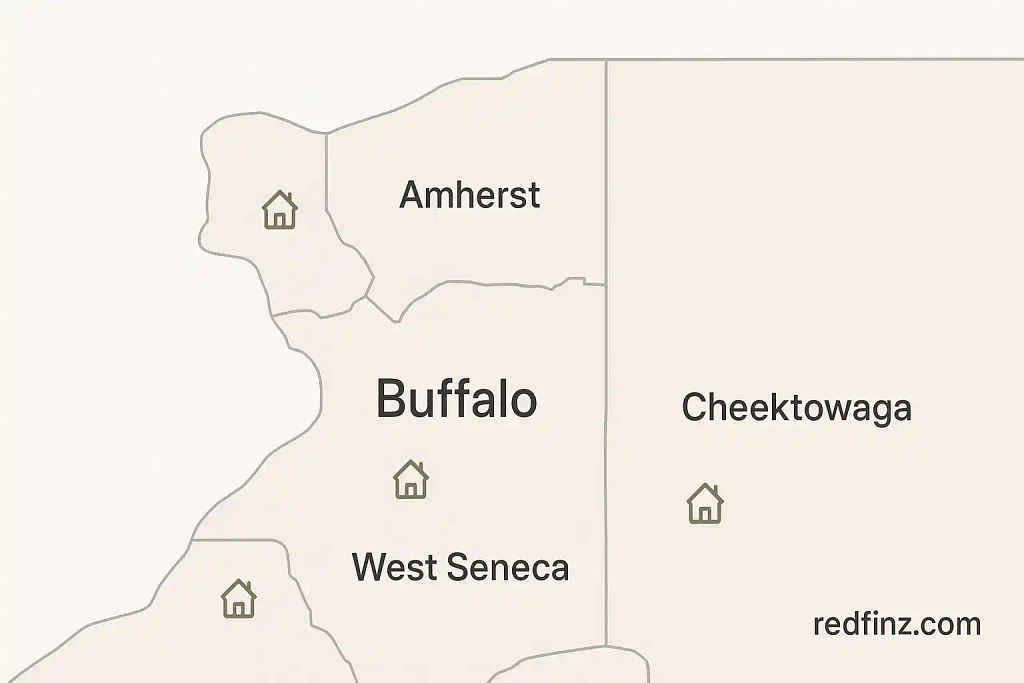
By mid-2026, several suburbs around Buffalo have adopted partial or conditional ADU allowances:
- Amherst: Permitted in single-family zones if under 800 sq. ft. with shared driveways.
- Cheektowaga: Allowed for family use; rental ADUs require zoning board approval.
- Tonawanda: Detached units approved with off-street parking and stormwater compliance.
- West Seneca: Pilot program allows attached ADUs for senior and accessibility housing.
These towns emphasize lot coverage, parking limits, and neighborhood character.
Homeowners should review each town’s zoning handbook or GIS parcel map before planning.
Reference: Erie County Internet Mapping – GIS Office (Erie County, NY)
Suburbs Restricting or Prohibiting ADUs (2026)
Some suburbs still ban or heavily restrict secondary dwellings:
- Clarence: Prohibits detached ADUs; only attached family accessory apartments allowed.
- Orchard Park: Bans ADUs in single-family zones due to septic system density limits.
- Lancaster: Under review; new ADU construction remains paused until 2026 planning hearings.
- Elma: Allows only temporary caregiver dwellings with expiration terms.
Common reasons include parking congestion, lot density, and infrastructure stress, especially sewer and water system capacity concerns.
How to Track Policy Changes in Erie County
Because ADU regulations change frequently, homeowners should:
- Review planning board meeting minutes from each town.
- Check zoning update pages under Town Clerk or Planning Department sections.
- Subscribe to the Erie County Housing Policy Update Newsletter.
- Use the New York State Department of State – Local Laws Database for legislative updates.
Why ADUs Could Shape Buffalo’s Housing Future
Buffalo and its suburbs are balancing tradition with modern housing needs. ADUs are becoming a quiet but powerful solution for affordability, accessibility, and flexibility. They can:
- Expand housing supply without large-scale developments.
- Support aging-in-place for older residents.
- Provide passive income opportunities.
- Reduce sprawl by maximizing existing land use.
By 2027, more Erie County towns are expected to legalize ADUs under conditional use permits and updated zoning overlays.
For a full overview of Buffalo’s sustainable housing and zoning trends, see the Buffalo Living and Property Trends 2026 guide.
FAQs
What towns near Buffalo currently allow ADUs?
Amherst, Tonawanda, and Cheektowaga allow partial ADUs, while West Seneca is testing attached-unit exceptions for seniors and accessibility housing.
Do you need a permit to build an ADU in Erie County?
Yes. Every town requires zoning and building permits, including site plans, setback reviews, and utility inspections.
Why do some suburbs still ban ADUs?
Concerns include parking overflow, septic system strain, and neighborhood density. Many councils plan to revisit these rules during the 2026–2027 reviews.
Do I need separate utilities for an ADU?
Yes. Most municipalities require separate water, gas, and electrical metering for safety and billing accuracy.
How do I apply for ADU approval in Erie County?
Contact your local zoning or planning department. Submit your site plan, ADU design, and proof of owner occupancy. Review times typically range from 4 to 8 weeks.
Are ADUs allowed on properties governed by HOAs?
Even if your town allows ADUs, some HOAs may restrict them. Review your deed and community covenants before building.
Note:
All zoning information verified with official City of Buffalo and Erie County sources, last checked October 2025.