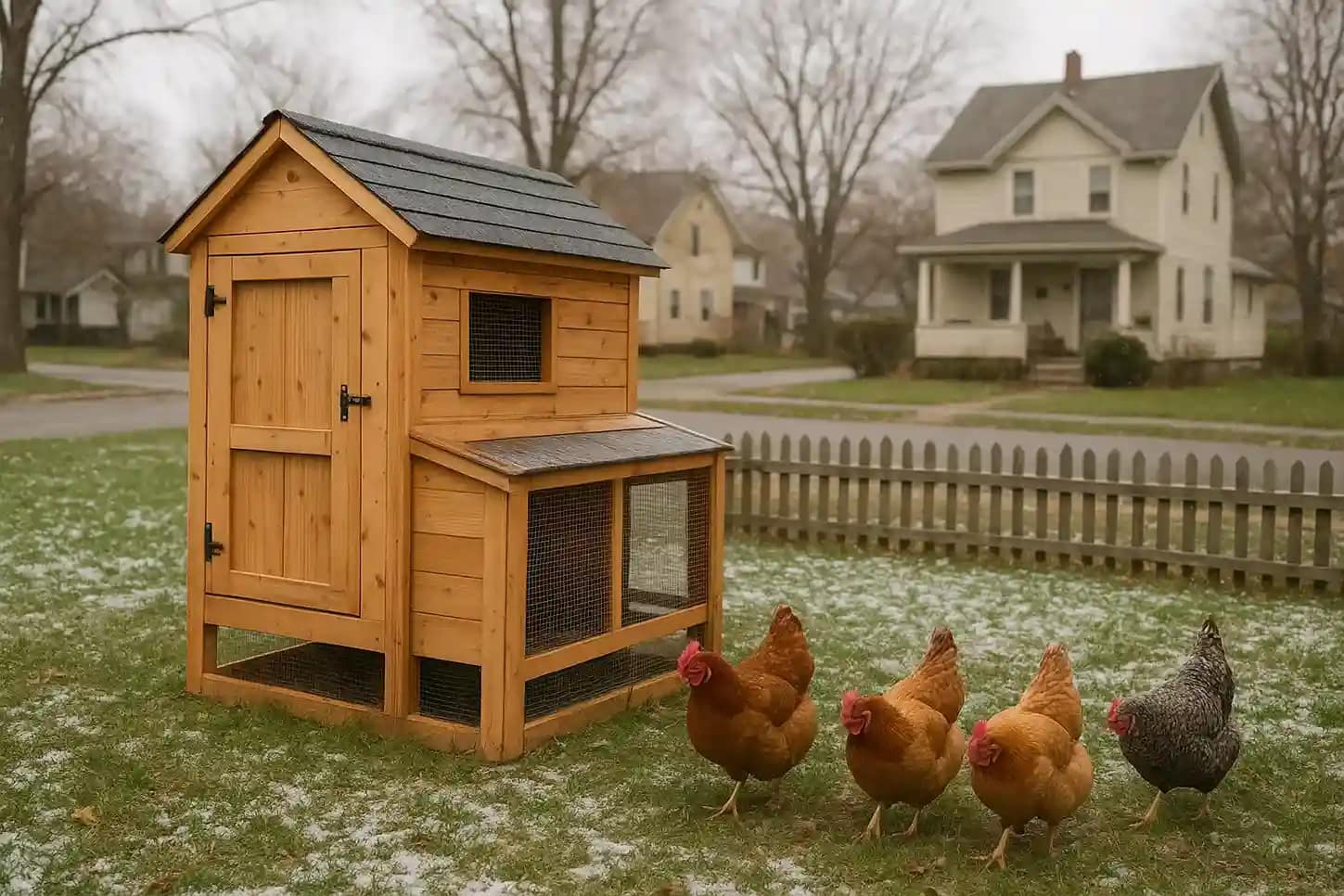
Keeping backyard chickens in Buffalo has grown from a niche hobby into a local sustainability movement.
Many residents, from eco-conscious families to urban gardeners, are discovering the benefits of raising hens for fresh eggs, soil enrichment, and natural pest control.
The city has modernized its animal ordinances to balance this lifestyle trend with neighborhood safety and sanitation.
Understanding the latest 2026 updates ensures homeowners stay compliant while enjoying the rewards of small-scale urban farming.
Before you build your coop or buy your first hens, here’s what you need to know about Buffalo’s current chicken-keeping laws and permit process.
(Source: City of Buffalo Municipal Code § 341-11.1 “Exceptions for chicken hens”)
Why Backyard Chickens Are Trending in Buffalo
Buffalo homeowners are embracing backyard chickens for sustainability, fresh food access, and community-driven urban farming.
Urban homesteading and local food
Across Buffalo’s neighborhoods, from Elmwood Village to North Park, raising hens connects residents to a growing urban homesteading culture.
Small yards are turning into eco-friendly spaces where hens help with pest control, composting, and soil enrichment.
Public health and community gardening
Buffalo’s Healthy Homes and Neighborhoods Program encourages local food production to lower grocery costs and promote environmental responsibility.
Backyard chickens support this mission while offering family learning opportunities about sustainability and nutrition.
(Source: Buffalo and Erie County Local Food Action Plan 2021)
Overview of Buffalo’s Chicken Ordinance (Updated 2026)
Buffalo refined its animal control rules in 2025 and continues to balance urban farming with public health and neighborhood safety in 2026.
Allowed bird count
Residents may keep up to five hens per household on properties smaller than one acre. Roosters are not allowed because of noise concerns.
Multi-family dwellings require written landlord consent before a permit can be issued.
Coop and spacing requirements
Coops must be at least 20 feet from nearby homes and 10 feet from property lines.
Each bird needs at least 4 square feet of indoor space and 10 square feet of outdoor run area to ensure health and cleanliness.
License fees and renewal
Chicken permits cost 25 dollars per year and must be renewed every January.
The Department of Permits and Inspections reviews each property before renewal to confirm compliance with housing and sanitation standards.
(Source: City of Buffalo Municipal Code § 341-11.1 “Exceptions for chicken hens”)
Rules on Noise, Waste, and Neighbors
Buffalo’s chicken rules focus on keeping coops clean and quiet to maintain harmony between homeowners and nearby residents.
Cleanliness and waste management
Coops must be cleaned weekly, and all droppings should be composted or sealed for disposal. Property owners who fail to maintain sanitation may face fines between 100 and 250 dollars.
Rooster prohibition
Roosters remain prohibited. If one is found on a property, Animal Control may suspend the owner’s permit until the issue is corrected and compliance is confirmed.
How to Apply for a Chicken Permit in Buffalo
Learn the simple steps to get your chicken-keeping permit in Buffalo to ensure your setup meets city safety and health rules.
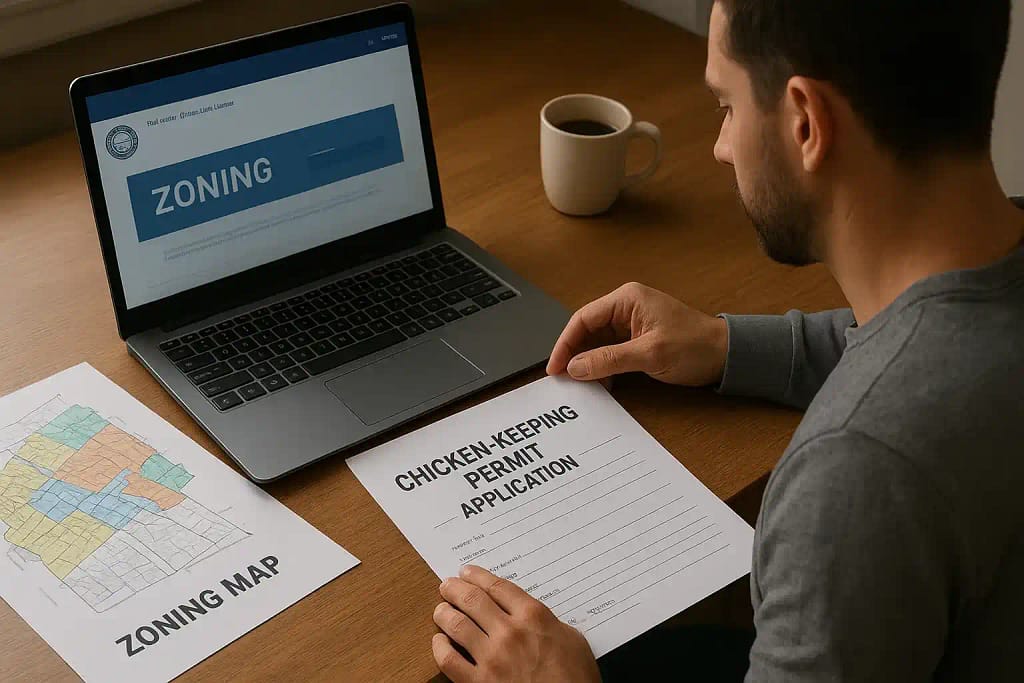
Step-by-step process
- Download the Chicken Permit Application from the City of Buffalo Department of Permit and Inspection Services.
- Prepare a detailed site plan showing coop placement and setbacks.
- Submit the 25 dollar fee with your completed application at City Hall Room 301.
- Schedule an inspection with Animal Control.
- Display the approved permit near your coop once issued.
Required documents
- Proof of property ownership or landlord consent
- Site photos or layout diagrams
- A sanitation plan for manure disposal
Inspectors review ventilation, drainage, and fencing to ensure compliance. Permits remain valid for 12 months.
Coop Design Ideas That Meet Buffalo Codes
Well-built coops help hens stay healthy through Buffalo’s cold winters while meeting city safety standards.
Minimum area and structure
Provide 4 square feet per bird indoors and 10 square feet in the outdoor run. Coops should be at least 4 feet tall with raised nesting boxes for airflow and protection.
Weatherproof materials
Use treated wood or insulated panels for durability through Buffalo’s winters.
Add sloped metal roofs to prevent snow buildup.
Install vent screens, predator-proof latches, and straw or pine bedding for insulation.
Provide heated water bowls and frost-proof feeders to keep hens hydrated and healthy in cold weather.
Practical Tips From Local Chicken Keepers
Local chicken owners share what works best for keeping hens healthy and productive through Buffalo’s long winters.
Winter care
Add clear plastic sheeting around the coop to reduce drafts while keeping enough ventilation for airflow. Use motion lights and buried wire mesh to deter raccoons, foxes, and other predators.
Feeding and egg collection
Feed hens layer pellets with vegetable scraps and oyster shells for calcium. Collect eggs daily in winter to prevent freezing or cracking.
Egg production often slows during short daylight months but usually returns by March with the help of gentle lighting.
(Community insight gathered from the Buffalo Backyard Chickens Group and local poultry forums, 2025. For care tips, see Cornell Cooperative Extension Poultry Resources)
Final Thoughts: Responsible Chicken Keeping in the City
Raising chickens in Buffalo is rewarding when done responsibly. Following local laws, keeping coops clean, and respecting neighbors ensures your hens remain a healthy addition to your property.
Buffalo’s progressive stance on urban farming reflects how older cities can adopt greener living, one backyard coop at a time.
For a full overview of Buffalo’s sustainable housing and zoning trends, see the Buffalo Living and Property Trends 2026 guide.
FAQs
Q 1. How many chickens can I keep in Buffalo?
Up to five hens per property. Roosters are not allowed.
Q 2. Do I need a license for backyard chickens?
Yes, apply through Buffalo Animal Control with a 25-dollar annual fee.
Q 3. Are there coop spacing rules?
Yes, coops must be 20 feet from nearby homes and 5 to 10 feet from property lines, depending on lot layout.
Q 4. What happens if I keep chickens without a permit?
Unlicensed coops may face fines or removal orders from Animal Control.
Q 5. How can I protect hens during Buffalo winters?
Use insulated coops, straw bedding, and heat lamps or heated bowls for frost protection.
Note:
All zoning information verified with official City of Buffalo and Erie County sources, last checked October 2025.