
What’s included in a patio quote goes far beyond a single price, it should cover excavation depth, compacted base thickness, exact material specifications, a drainage plan, itemised labour, a milestone-based payment schedule, and a written workmanship warranty. If any of these are missing, you are not comparing quotes, you are comparing assumptions.
Receiving a patio quote can feel like trying to read a foreign language. One contractor sends four pages of detailed breakdowns. Another sends a single number on a half-page document. Both claim to be pricing the same job.
They are not. And that difference matters more than most homeowners realise. Understanding what belongs in a proper patio quote, and what is quietly left out, is the difference between a project that stays on budget and one that doesn’t.
Use our Patio Cost Calculator to set a realistic budget before collecting quotes, knowing real market numbers puts you in a significantly stronger position when proposals come in.
What’s Included in a Patio Quote: Every Section Explained
A proper patio quote is not a single number. It is a document that shows you exactly where every pound or dollar is going, and leaves no room for the contractor to quietly change what was agreed. Here is every section it should contain.
Project Details and Scope
The quote should open with basic project information: your name and address, the contractor’s company details, a quote reference number, the proposed start date, and a clear summary of what is being built.
A good scope statement should be specific enough to answer: What is being built, how large is it, and what materials are involved? “Install paver patio with drainage and cleanup” is not a scope. “Install 400 sq ft concrete paver patio with 6-inch compacted base, drainage grading, polymeric sand joints, and full site cleanup” is.
Site Preparation and Demolition
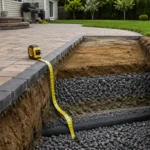
Before any base material goes in, the existing ground has to be cleared and prepared. This section should specify whether the quote includes: removal of existing concrete or pavers, grass and sod stripping, excavation depth in inches, soil disposal, and hauling fees.
Excavating a 400 square foot patio to 8 inches deep generates roughly 10 cubic yards of soil, that material needs to be removed, and those costs belong in the quote. Many low quotes simply write “excavation included” without specifying where the soil goes or who pays for disposal.
| What to Look For | Red Flag |
|---|---|
| Excavation depth stated in inches | “Excavation as required” |
| Soil disposal explicitly included | No mention of hauling fees |
| Demolition of existing surfaces listed | “Site prep included” with no detail |
Base Preparation — The Most Critical Section
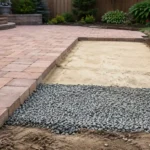
The base determines whether your patio lasts two years or twenty. A proper quote should specify: geotextile separation fabric (yes or no), aggregate base material type, and compacted base thickness in inches. For a standard paver patio, the minimum is 4 to 6 inches of compacted crushed stone, installed in 2-inch layers and mechanically compacted after each layer.
If a quote says “base preparation included” without any depth measurement, the contractor is not committing to doing it properly.
Redfinz Tip: Ask any contractor this before signing: “How many inches of compacted base are you installing, and do you compact in lifts?” A professional answers immediately and specifically. Vague answers here are a reliable signal of a vague installation.
Materials — Specific, Not Generic
The quote should identify exact materials, not “premium pavers” but the brand, product line, colour, and thickness. Not “base aggregate” but the specific type of crushed stone. Generic descriptions allow contractors to substitute cheaper products after you have signed.
The materials section should also confirm: bedding sand specification, edge restraint type, and whether polymeric joint sand is included. Polymeric sand matters because it activates with water to form a binding agent that resists weed growth and insect penetration. Standard play sand washes out within months and leaves joints open for weeds. These are not interchangeable, and the difference should be visible in the quote.
The quote should also confirm a 5 to 10 percent material overage for cuts and waste. If the patio is 400 square feet, the quote should show at least 420 to 440 square feet of material ordered.
Drainage
Water causes more patio failures than almost anything else. A professional quote addresses drainage specifically, not as an afterthought.
The drainage section should state the planned slope. The industry standard is a minimum of one-eighth of an inch drop per linear foot, sloping away from the house foundation. If the patio extends 12 feet from the back door, the far edge should sit at least 1.5 inches lower than the edge nearest the house.
If the site has poor natural drainage, the quote should also specify whether channel drains, French drains, or catch basins are included. A quote that says nothing about drainage slope or water direction has not addressed one of the most common causes of patio failure.
For more on why drainage is frequently left out and what it costs to fix after the fact, the hidden costs in patio installation guide covers the full picture.
Labour, Cleanup, and Site Restoration
Labour should appear as a visible line item, not absorbed silently into the total. Cleanup should be defined specifically, not just “included” but what it means in practice: soil removal, debris disposal, pressure washing, and whether lawn repair around the patio perimeter is covered.
Heavy machinery causes turf damage. A fair quote specifies whether lawn restoration is included or explicitly excludes it, so there is no dispute once the project is complete.
Contractor Credentials
The quote itself should reference the contractor’s license number and insurance coverage. A legitimate contractor will carry general liability insurance and workers’ compensation. If a worker is injured on your property and the contractor has no coverage, your homeowner’s insurance may be liable.
Ask any contractor to provide a Certificate of Insurance before work begins. A professional has no reason to hesitate.
Itemised vs Lump-Sum: Which Should You Choose?

A lump-sum quote gives you a single total. An itemised quote breaks the project into separate costs for each phase. For most residential patio projects, the itemised quote gives you significantly better protection.
When you receive three quotes at different prices, you can only compare them fairly if you know what each one includes. A lump-sum quote at £9,500 may appear cheaper than an itemised one at £12,000, until you discover the cheaper quote has a 3-inch base, no drainage plan, and excludes soil disposal. The more expensive quote may represent far better value once the full scope is understood.
Itemised quotes also protect you during the project. If you need to reduce scope, you can calculate savings accurately. If the contractor requests a change order, you have a reference point for their unit rates. And if a dispute arises, both parties have a written record of what was agreed.
A lump-sum quote is only acceptable when it is accompanied by a highly detailed scope of work document that specifies every phase, depth, material, and exclusion. A single total with minimal supporting detail is where misunderstandings are born.
How Extras Should Be Quoted Separately
When your project includes steps, lighting, a fire pit, or seating walls, those features should appear as separate sections, never bundled into the base patio price.
Separate pricing lets you make informed budget decisions and phase features across time. A well-organised quote might look like this:
| Section | Subtotal |
|---|---|
| Base patio — 400 sq ft | $12,000 |
| Three paver steps | $2,100 |
| Low-voltage lighting (8 fixtures) | $1,800 |
| Gas fire pit with burner | $3,500 |
| Seating wall — 15 linear ft | $2,800 |
| Full project total | $22,200 |
That format tells you immediately which features you can defer to a later phase if the budget needs adjusting. It also gives the contractor a clear reference point for any change orders mid-project.
Payment Terms — What Is Normal and What Is Not

A professional patio quote includes a clear payment schedule tied to project milestones, not to calendar dates or contractor preference. A reasonable structure for most residential patio projects:
| Milestone | Payment |
|---|---|
| Contract signed (booking deposit) | 10–30% |
| Materials delivered / excavation starts | 30–40% |
| Base preparation completed | 20–25% |
| Final completion and walkthrough | 10–15% |
A deposit of 10 to 30 percent is normal and reasonable. Above 40 to 50 percent before substantial work has started deserves scrutiny. Full payment required upfront is a serious warning sign.
Check the quote expiry date. Material costs fluctuate quarterly, and most professional quotes are valid for 30 to 60 days. If a quote has no expiry date, ask the contractor when the pricing locks in, signing a quote from February in July may not be valid at the original price.
Check the change order clause. The quote should specify that any additional work requires written authorisation and agreed pricing before it proceeds. An open-ended change order process, or none at all, is where mid-project budget surprises usually come from.
The Warranty Section

A professional patio quote should contain two separate warranties.
The manufacturer’s material warranty covers defects in the paving product itself, cracking, fading, or manufacturing flaws. Premium brands typically offer substantial stone warranties.
The contractor’s workmanship warranty covers installation errors, settling from poor compaction, failed edge restraints, drainage problems from incorrect grading, or loose pavers. This is the warranty that matters most, and it should be written explicitly into the contract.
A minimum of 2 years is reasonable for a standard patio contractor. A quality installer may offer 5 years. The warranty should specify what triggers a repair, for example, “any section that settles more than one-quarter of an inch within the warranty period will be repaired at no cost, including labour and materials.”
Be cautious of warranty language that excludes “normal settling” or “soil movement.” A properly built patio on a correctly compacted base should not settle noticeably. Those exclusions often pre-empt responsibility for exactly the problems that a poor installation causes.
Red Flags That Should Make You Ask Questions
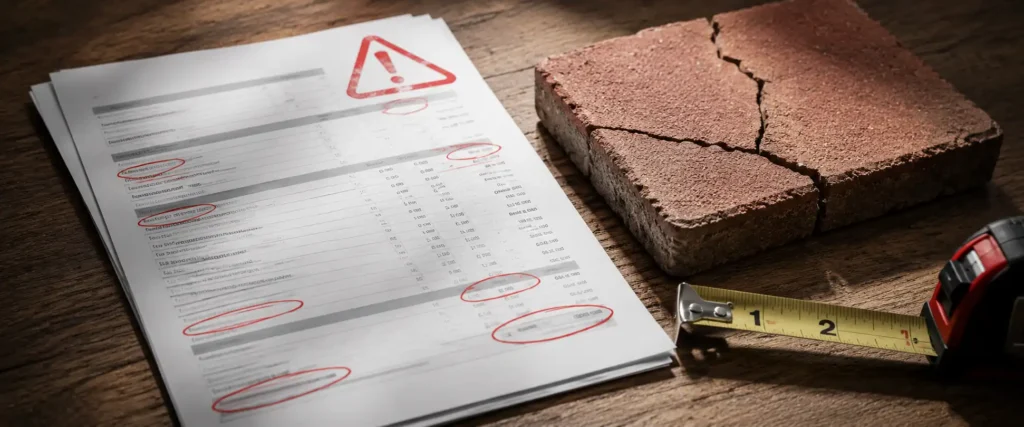
| Red Flag in Quote | What It Usually Means | What to Ask |
|---|---|---|
| No excavation depth stated | Not committing to proper depth | “How many inches are you digging?” |
| No base thickness specified | Base may be undersized | “What is the compacted base depth?” |
| Drainage not mentioned | Water management ignored | “What is the planned patio slope?” |
| Single “site prep” line | Hidden costs incoming | “What does site prep specifically include?” |
| 40%+ deposit before work starts | Cash flow concern | Request milestone-based schedule |
| No exclusions section | Change orders likely | “Please list what is not included” |
| Quote valid indefinitely | Material pricing unstated | “When does this quote expire?” |
For a broader look at why quotes vary so significantly between contractors, the why patio quotes vary guide covers the full picture behind pricing differences.
How to Compare Three Quotes Side by Side
Comparing quotes on total price alone is one of the most common, and costly mistakes homeowners make. Once you have three quotes, use this framework to compare them properly:
Step 1 — Check excavation depth across all three. If one contractor is digging 8 inches and another is digging 4 inches, they are not building the same patio. This single number often explains most of the price difference.
Step 2 — Compare base thickness and material. Six inches of compacted crushed stone is not the same as three inches of sand. Confirm the type and depth in each quote.
Step 3 — Look at what each quote excludes. The cheapest quote is frequently cheap because it excludes soil disposal, drainage, or lawn restoration. Add those costs back in before comparing totals.
Step 4 — Compare material specifications. If two quotes say “pavers” and one specifies a named brand, product line, and thickness, only one of them is priced accurately.
Step 5 — Compare payment terms and warranty. A contractor with a 5-year warranty and milestone payments represents different risk than one with a verbal guarantee and a 50 percent upfront demand.
Frequently Asked Questions
What is the most important thing to check in a patio quote?
Check excavation depth and base thickness first. These two numbers determine how long your patio will last. Then check whether drainage is addressed and what the exclusions section says. The total price matters far less than understanding what it covers.
Should a patio quote include permits?
The quote should clearly state whether permits are included, who is responsible for obtaining them, and what the cost is. If permits are left to the homeowner, the contractor should explain exactly what is required and in what timeframe.
How much deposit is normal for a patio installation?
A deposit of 10 to 30 percent is standard for most residential projects. Above 40 to 50 percent before significant work starts deserves scrutiny. Full payment required upfront is a serious warning sign.
What does a workmanship warranty actually cover?
A contractor’s workmanship warranty covers installation errors, poor compaction, incorrect drainage grading, failed edge restraints. It does not cover manufacturing defects in the stone itself, which falls under the manufacturer’s separate warranty. The threshold for a repair, for example, settlement of more than one-quarter inch, should be written into the contract.
How long should a patio workmanship warranty last?
Two years is the reasonable minimum from a standard patio contractor. Quality installers typically offer five years. The duration matters less than the specific terms, what triggers a repair call and what is explicitly excluded.
Is a lump-sum patio quote ever acceptable?
Yes, if it is supported by a detailed scope of work document that specifies excavation depth, base thickness, drainage plan, materials, payment milestones, and exclusions. A single price with a two-line description is where most mid-project disputes begin.
Final Thoughts
A patio quote is a window into how a contractor actually works. The detail they invest before the project starts usually reflects the care they will invest during construction.
You do not need the most elaborate quote or the most expensive contractor. You need one that clearly explains what is being built underground, how water will be managed, what the payment milestones are, and what is not included. Those answers cost nothing to ask for and can save you a great deal later.
Before you start collecting quotes, build your budget baseline with the free Patio Cost Calculator, knowing realistic market numbers puts you in a much stronger negotiating position from the very first conversation.
Cost data referenced from Angi and hardscape industry contractor surveys. Prices vary by region, site conditions, and contractor. Always obtain a minimum of three itemised quotes before committing to a project.