Hidden costs in patio installation are responsible for most of the budget surprises homeowners experience after signing a contract.
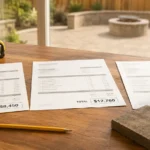
Most homeowners receive a patio quote, approve it, and then receive a final invoice that is noticeably higher. The gap between those two numbers is not usually the result of dishonesty.
It is the result of hidden costs in patio installation that standard quotes rarely capture upfront — and that most contractors either do not know how to predict or choose not to include in an opening bid.
This guide covers every significant hidden cost category, what triggers each one, and realistic price ranges for both the USA and UK markets so you can build a budget that reflects what projects actually cost rather than what opening quotes suggest.
Before reading quotes, run your own estimate using the Patio Cost Calculator — it factors in the full installation picture across seven countries.
Why Hidden Costs Exist in Patio Projects
Patio quotes are almost always based on assumptions. A contractor inspects the surface of your garden, estimates access conditions, assumes normal soil, and prices accordingly. The moment any of those assumptions turn out to be wrong — and on residential projects, they frequently do — additional costs emerge.
Some contractors omit extras intentionally to produce an attractive opening number. Others genuinely cannot predict every variable until excavation begins. The result is the same either way: a budget that felt settled becomes unsettled mid-project.
Understanding where the hidden costs come from is the most effective way to prevent budget shock. The patio cost per square foot guide shows how the full layered cost of installation compares to what most people expect when they see a per-square-foot headline figure.
Excavation and Soil Removal
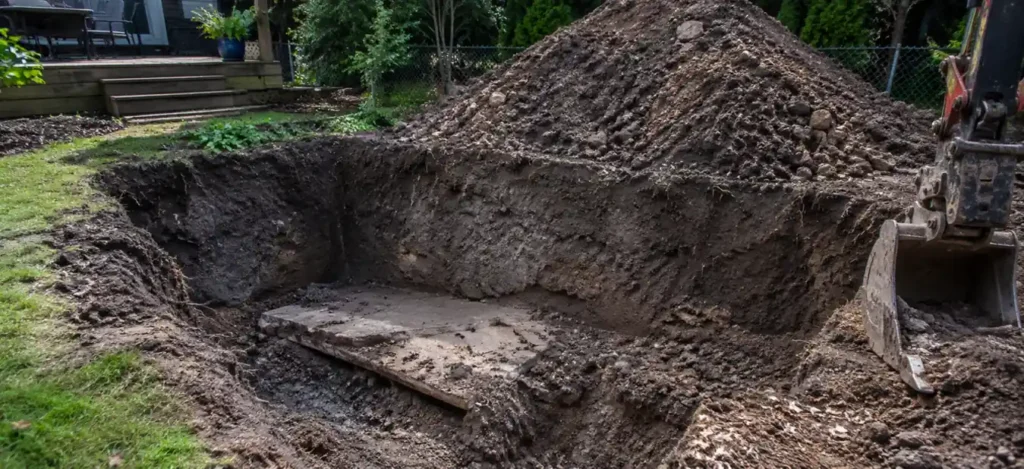
This is the most commonly underestimated cost in any patio project.
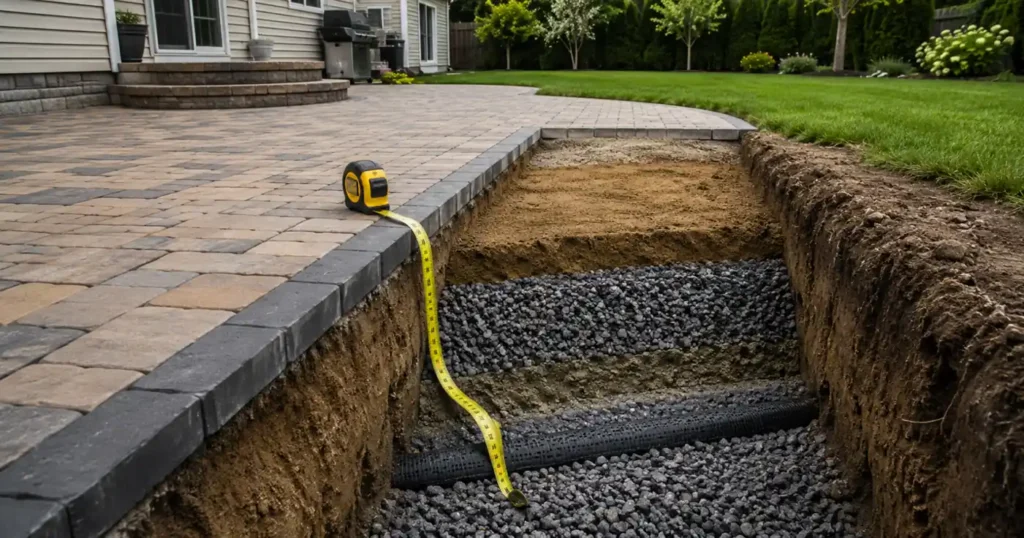
Homeowners imagine a patio going on top of their existing garden. Contractors know a patio requires excavating several inches of soil before any base material can be installed. That excavated soil has to go somewhere — and getting rid of it costs money that many quotes leave out entirely.
A 300 square foot patio excavated to 7 inches generates approximately 5 to 6 tonnes of material. That volume requires skips, grab lorries, or multiple truck loads to remove. It also expands when loosened — dug soil increases in volume by 30 to 40 percent, meaning the pile in your garden looks significantly larger than the hole it came from.
The situation gets more expensive when excavation reveals what was not visible from the surface: thick clay that resists machinery, old concrete from a previous patio, buried rubble from original construction, or unstable fill material that requires deeper excavation and additional base work.
Typical costs — Excavation and disposal:
| Item | USA | UK |
|---|---|---|
| Standard excavation | $3–$8 per sq ft | £8–£15 per m² |
| Skip hire / dumpster rental | $300–$900 | £120–£300 |
| Soil and muck-away disposal | $500–$2,500 | £200–£600 |
| Buried concrete removal | $800–$4,000+ | £500–£2,500 |
| Clay or difficult soil surcharge | $500–$2,000 | £300–£1,500 |
The practical advice: ask every contractor to specify what their quote assumes about soil conditions and what happens — in writing — if something different is found during excavation. The change-order process for soil surprises is where many budgets first start to drift.
Base Preparation Upgrades
A standard patio quote assumes stable soil that can support a conventional gravel base. When the ground turns out to be less cooperative, base preparation becomes more extensive and more expensive.
Soft ground, organic material, waterlogged clay, or poor fill material all require solutions that go beyond the standard specification. Contractors may need to excavate deeper, import more compacted aggregate, install geotextile stabilisation fabric, or in serious cases bring in specialist ground stabilisation.
These upgrades are not optional — a patio built on an inadequate base will settle, crack, and drain poorly regardless of how good the surface material is.
Typical costs — Base preparation upgrades:
| Item | USA | UK |
|---|---|---|
| Additional crushed stone | $1,000–$4,000 | £500–£2,000 |
| Geotextile stabilisation fabric | $300–$1,500 | £200–£800 |
| Deep ground stabilisation | $2,000–$8,000+ | £1,500–£5,000+ |
Drainage Corrections
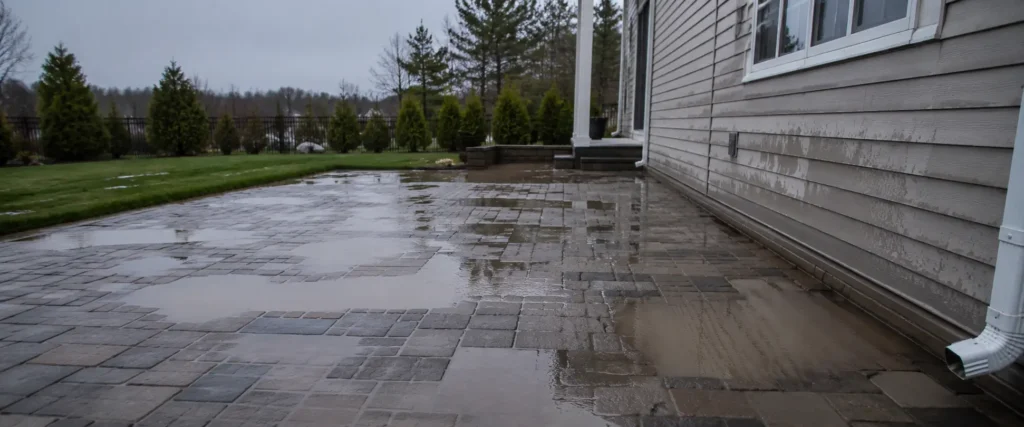
Water management is one of the most important — and most frequently omitted — aspects of patio installation. A patio surface is impermeable. Every drop of rain that falls on it has to go somewhere. If that somewhere is not planned deliberately, it defaults to wherever gravity and ground conditions direct it — which is sometimes directly toward the house foundation.
A good installation includes a deliberate slope of approximately one-quarter inch per linear foot away from any structures. Simple gardens on well-draining soil may need nothing more. Gardens with clay soil, unusual slopes, or patios positioned near the house may need channel drains, French drains, soakaways, or regrading work to manage water effectively.
None of this typically appears in an opening quote. Drainage requirements are site-specific and can only be fully assessed when excavation reveals what the ground actually does with water.
When drainage is done badly, the consequences appear gradually: puddles that persist after rain, moss and algae growth in low spots, pavers that shift as water undermines the base, and in serious cases water finding its way toward foundations and into basement or crawl spaces.
Typical costs — Drainage:
| Item | USA | UK |
|---|---|---|
| Channel drain installation | $500–$2,000 | £50–£100 per linear metre |
| French drain system | $1,500–$6,000 | £800–£3,000 |
| Soakaway installation | Less common | £200–£500 |
| Yard regrading | $1,000–$5,000 | £500–£2,500 |
| Site levelling surcharge | $500–$2,000 | £40–£60 per m² |
Difficult Backyard Access
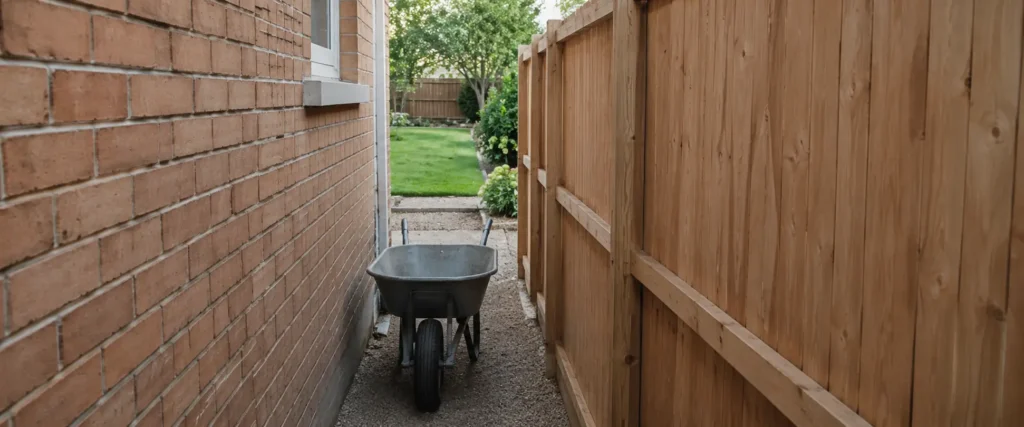
Standard patio quotes assume machinery can reach the work area. A mini-excavator, plate compactor, and loaded wheelbarrow all need clear passage to function efficiently. When that passage does not exist, the cost of the project changes.
Narrow side gates, steps between the street and the garden, a steep slope, neighbouring properties with no access route, or urban gardens surrounded by walls all restrict what machinery can reach. When a contractor cannot get a skid-steer or mini-excavator to the site, manual labour replaces machine efficiency — and manual labour is significantly more expensive per tonne moved.
A project that takes a machine half a day to excavate may take two labourers three days by wheelbarrow. Every tonne of gravel base that cannot be delivered by machine must be carried through whatever gap exists. The project is identical in scope but dramatically different in labour cost.
Typical access-related cost additions:
| Issue | USA | UK |
|---|---|---|
| Narrow gate manual labour surcharge | $500–$3,000 | £300–£2,000 |
| Full hand-digging requirement | $1,000–$5,000 | £500–£3,000 |
| Material transport through house | $1,500–$6,000 | £1,000–£5,000 |
| Narrow-track equipment hire | Varies | £150–£300 per day extra |
Always walk a prospective contractor through the actual access route before they quote. A contractor who quotes without seeing your access is making an assumption that can later become a change order.
Retaining Walls and Level Changes
A flat garden produces a flat patio. A sloping garden produces a significantly more expensive project.
To build a level patio surface on sloped ground, contractors must either cut into the slope or build up from it. Building up requires structural retaining walls to hold back the earth. Those walls involve engineering, drainage behind the wall face, structural block or masonry work, and integration with the patio surface. This transforms a paving project into a partially structural one.
Even modest slopes — a drop of 30 centimetres across a 4-metre patio — can require formal retaining work to produce a level surface. Homeowners who see the slope in their garden but do not connect it to structural cost are routinely surprised.
Typical costs — Retaining and level changes:
| Item | USA | UK |
|---|---|---|
| Small retaining wall | $2,000–$8,000 | £1,500–£6,000 |
| Engineered wall system | $10,000–$40,000+ | £8,000–£30,000+ |
| Each step or stair | $300–$1,200 | £100–£300 per step |
Permits, Inspections, and HOA Approvals
Most ground-level patios in residential gardens do not require permits. But there are exceptions, and those exceptions create real costs.
Patios that include electrical work, gas lines, drainage modifications, retaining walls above certain heights, or non-permeable surfaces covering a significant portion of a property can trigger permit requirements. In the USA, HOA approval may add another layer of administrative process. In the UK, front garden patios using non-permeable materials require planning permission under permitted development rules.
When permits are required and the contractor has not included them in the quote, homeowners face both the permit cost itself and potential delays while applications are processed.
Typical permit-related costs:
| Item | USA | UK |
|---|---|---|
| Basic patio permit | $100–$800 | Often not required |
| Structural or drainage permit | $500–$3,000+ | £100–£1,000+ |
| Engineering drawings | $500–$5,000 | £300–£3,000 |
| HOA application | $100–$500 | Not applicable |
Utility Lines and Underground Surprises
Excavation occasionally encounters what nobody expected: an irrigation system, an electrical conduit, a gas pipe, or old drainage infrastructure. These discoveries halt work while the situation is assessed and resolved.
Relocating utilities is expensive and sometimes involves licensed specialists — electricians, gas engineers, or water company personnel — rather than the patio crew. The patio contractor cannot continue until the issue is resolved, and their time on site during that delay still carries a cost.
Typical utility-related costs:
| Item | USA | UK |
|---|---|---|
| Irrigation repair or relocation | $200–$2,000 | £100–£1,000 |
| Electrical conduit relocation | $500–$5,000 | £300–£3,000 |
| Gas line investigation | $500–$3,000 | £400–£2,000 |
Property Damage and Site Restoration
Heavy machinery causes collateral damage that opening quotes rarely address. A skid-steer driving across a lawn leaves deep ruts. A delivery vehicle reversing over a border destroys plantings. Gate posts get damaged when materials are moved through. Neighbouring fences get scratched or dislodged.
Putting the garden back to a presentable condition after a patio installation is genuine work that carries genuine cost. Re-seeding or re-turfing lawn damage, repairing or replacing gates, and restoring disturbed planting beds all add to the final invoice when they are not included in the opening quote.
Typical restoration costs:
| Item | USA | UK |
|---|---|---|
| Lawn repair and re-seeding | $500–$2,500 | £300–£1,200 |
| Gate or fence repair | $200–$1,500 | £100–£800 |
| Planting bed restoration | $300–$2,000 | £200–£1,000 |
Scope Creep: The Hidden Cost You Create Yourself
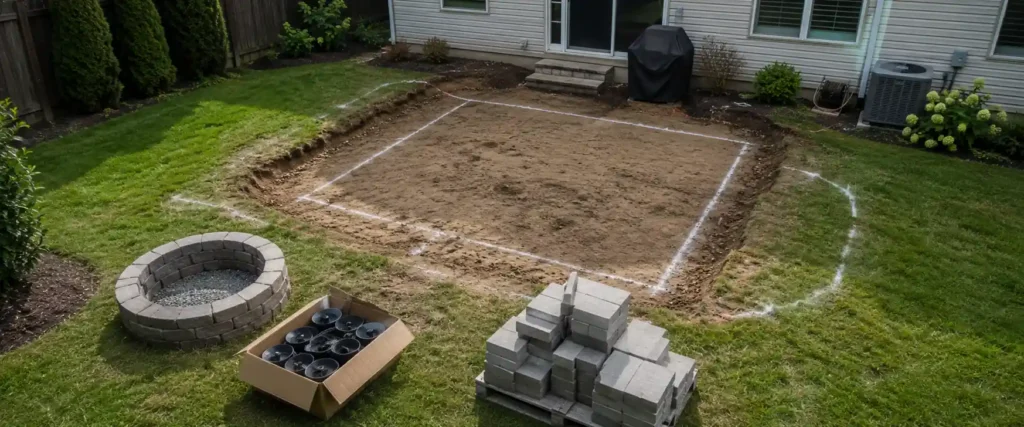
The most consistent hidden cost in patio projects is not discovered during excavation. It is generated by the homeowner once the project is underway.
Once a garden is open and the space starts taking shape, the imagination activates. A plain rectangular patio suddenly looks like it needs a contrasting border. The patio that looked fine in planning now seems like it could extend another metre. The thought arises: the crew is already here, the equipment is already on site, now would be the perfect time to add that fire pit or those lights.
Each individual addition seems manageable. Combined, they can add thousands to the final invoice.
Common mid-project additions and their costs:
| Addition | USA | UK |
|---|---|---|
| Contrasting paver border | $1,200–$3,000 | £400–£1,500 |
| Size extension (per extra sq ft) | $15–$45 per sq ft | £60–£150 per m² |
| Fire pit installation | $1,500–$8,000 | £800–£5,000 |
| Low-voltage lighting | $1,200–$4,000 | £500–£2,500 |
| Seating wall | $2,000–$8,000 | £1,500–£6,000 |
| Pergola | $3,000–$20,000+ | £2,000–£15,000+ |
The reason mid-project additions cost more than they would at the planning stage is workflow disruption. A crew that has finished excavating and begun base preparation must stop, adjust the layout, recalculate materials, reorder supplies, and potentially redo compacted areas. That disruption has a cost that would not exist if the change had been made before work started.
The most effective protection against scope creep is a “frozen design” rule: the layout is finalised and signed off before excavation begins, and any mid-project changes require a written change order with a confirmed cost before proceeding.
Use the free Patio Cost Calculator to model additions before committing — running alternative scenarios in the calculator takes minutes and reveals whether a mid-project upgrade fits the remaining budget.
The 15 Percent Rule
Every experienced homeowner who has been through a patio project arrives at the same conclusion: the quote is not the budget. The budget is the quote plus a contingency.
A 15 percent contingency applied before construction begins covers the most common hidden cost scenarios without derailing the project if they arise. A 300 square foot patio quoted at $12,000 should be budgeted at $13,800. If the contingency is not needed, it becomes money available for a genuine upgrade. If it is needed — and on residential construction projects, surprises are the norm rather than the exception — the project continues without crisis.
The homeowners who find patio projects genuinely stressful are almost always the ones who budgeted to the exact quote figure and had no room for the variables that construction routinely produces.
Frequently Asked Questions
What are the most common hidden costs in patio installation?
The most frequent budget additions are excavation soil disposal, drainage corrections, difficult access surcharges, base preparation upgrades when poor soil is found, and mid-project scope changes. Together these can add 15 to 40 percent to the original quoted price.
Do patio quotes include waste removal?
Not always. Many quotes cover excavation labour but not soil disposal or skip hire. Always confirm explicitly whether haul-away and disposal fees are included. If they are not, add $300 to $2,500 in the USA or £120 to £600 in the UK to your budget.
Why did my patio cost more than quoted?
The most common reasons are soil or drainage surprises discovered during excavation, site access being more restricted than assumed, design changes made mid-project, or scope items that were excluded from the opening quote and added later as change orders.
How do I avoid hidden patio costs?
Ask every contractor to specify what their quote assumes and what is explicitly excluded. Request a written change-order process before signing. Add 15 percent contingency to your approved budget. Freeze the design before excavation begins and require written approval for any mid-project changes.
Are permits included in patio quotes?
Usually not. Permits are often listed as the homeowner’s responsibility or excluded without mention. Confirm who handles permits and whether the cost is included before signing any contract.
What is patio scope creep and how much does it cost?
Scope creep is the gradual addition of features mid-project that were not in the original plan. Common additions — borders, lighting, fire pits, size extensions — each feel manageable individually but combine to add thousands to the final invoice. The best prevention is finalising every design decision before work starts and requiring written change orders for anything added afterward.
Summary
Hidden costs in patio installation are not an anomaly. They are a predictable feature of a project type where much of the important work is invisible, site conditions cannot be fully known until excavation begins, and homeowners naturally respond to the excitement of a project in progress.
The most consistent hidden costs are excavation disposal, drainage corrections, access-related labour increases, and scope changes made mid-project. Together they routinely add 15 to 40 percent to opening quotes.
Building a realistic budget means starting with a quoted price, adding the most likely extras for your specific site, and reserving a 15 percent contingency on top of that total. A patio that genuinely costs $14,000 is a better outcome than one quoted at $10,000 that invoices at $14,000 — because the first version lets you plan, and the second version creates stress.
For a complete cost estimate that reflects your country, material, and site conditions, use the Patio Cost Calculator before approaching contractors. And for more on why quotes vary so significantly between contractors, the patio quotes guide covers the full picture.
Price ranges based on industry data from Angi and UK contractor surveys. All figures are estimates. Costs vary by region, site conditions, and contractor. Obtain a minimum of three itemised quotes before committing to any project.